High-tech has lately become one of the most fashionable trends in interior design. High-tech or hi-tech from the English high technology — high technology — a style in interiors and architecture that emerged in the 1980s.
High-tech belongs to the ultramodern, and it is the interior style of the contemporary and the young. High-tech emerged from the design of industrial premises, in which the interior was subordinated to function. As a result of industrial elements moving into living space, a blend of high technology and constructivism was born.
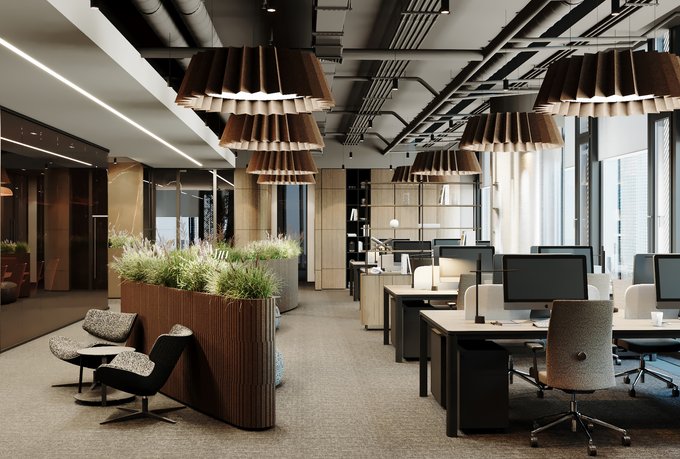
Elements of industrial aesthetics moved into the living space, where they developed further. Structural openness, the inclusion of pipes, reinforcement and air ducts in the visual field, a complex structuring of space, favorite materials: metal, glass, concrete — these are the characteristic features of high-tech. The near-total absence of décor is compensated here by the work of texture — the play of light on glass, the gleam of chrome and metal surfaces, the grain of natural wood. To this may be added exposed brick and a variety of contemporary synthetic materials.
On the one hand high-tech — is excessive coldness, technicality, functionality; on the other — a harmonious combination of space and light, the form of objects and their color plus ideal proportions, the most functional use of space and restrained décor.
In a room designed in the high-tech style, engineering structures, glass and metal details are usually present in abundance. Every element here carries a functional load.
 High-tech space is complexly structured — all manner of pipes, elevators, cables, masonry — are put on display. Decorative details — fasteners, rivets, metal and iron parts. What is usually hidden, in a high-tech interior is, on the contrary, left open; such elements — are the foundation of the style. High-tech is distinguished by straight, sweeping lines, sharp forms, more often executed in metal.
High-tech in the interior uses the most contemporary materials, the principal ones — metal and glass, but concrete, stone and natural wood are also used; exposed brickwork is not excluded and open brick is welcome. You may use whatever materials you like; there are no limits, only observe the technological character. Walls may be painted with a paint that gives a smooth, glossy surface, or finished with liquid wallpaper with a relief pattern. Floors are made of ceramic tile, natural stone, or laid with linoleum; ceilings — of acrylic or stretch.
Rooms in the high-tech style are spacious, without any ornaments and other decorative details on the walls. White is the dominant color, with the addition of neutral, pale shades — cream, bluish-gray and golden-yellow. Sometimes black serves as the base background, and here and there strokes of beige or coffee may flash, or even pastel blue, pink and green.
Bright details in a high-tech interior will invariably be the elements of engineering equipment: fasteners and rivets, bolts and brackets, all manner of joints and structural nodes, pipes, reinforcement and other refinements. Highly relevant too are and objects of technical equipment, for example trusses, open frames, containers. If you very much want to place a traditional coffee table in a high-tech interior, then it should at least be on casters, in the manner of a medical one. Of course, all appliances — built-in, tables and shelves — of glass, and chairs must come with metal legs and backs. Doors and partitions are predominantly of unbreakable glass, frosted or transparent. If they are sliding doors — then, naturally, in an aluminum frame.
The high-tech style — is a triumph of material: contemporary, stylish, highly technological. Instead of curtains, blinds are the perfect fit. Mirrors — without frames and décor, and on the wall, instead of paintings — graphics without fail, or better still a black-and-white photograph. Tableware — chrome, gleaming, of simple and laconic forms, expressive in design. High-tech is so sensitive to any presence of a foreign object that dissonance in the setting may be caused by some seemingly insignificant detail. In this lies one of the chief difficulties of this interior style, which will not tolerate carelessness — everything must be uncompromising and ideal.
The principal features of an interior in the high-tech style — strict forms in combination with maximum functionality, metal, chrome, aluminum and plastic, ergonomics, multi-functionality.
An apartment in the high-tech style can be compared to a spaceship. This interior style appeals to energetic and contemporary people who value clarity and precision. High-tech was created for the inhabitants of big cities. Here everything must be even, gleaming and smooth — walls, ceiling, doors, window frames.
 High-tech brings into the interior a sense of light and space, focusing attention not on the color palette or pattern, but on form and texture of architectural details and interior objects.
Lighting — is an important part of an interior executed in the high-tech style. Forget about classic chandeliers, crystal pendants, floral motifs, assorted lanterns and bronze from a palace.
Lighting should in a flattering light emphasize the texture of the materials used in the interior. The more light there is, the more brightly the metal will shimmer and the glass will glow, creating a unique atmosphere. The décor of the light sources must correspond to the entire high-tech interior, and that means being made of already used materials. And here one cannot do without glass. Glass floor lamps and lamps will fit perfectly into the interior. A multitude of small bulbs will look very stylish. Light sources should be placed with their functionality in mind; there should be many of them and they should be arranged in different ways: overhead light, lower, side. High-tech fixtures are distinguished by a diversity of forms, sometimes entirely fantastic, and by the fancifulness of their constructions.
Tension systems make it possible to model space, drawing attention to some objects and hiding others in shadow.
Numerous built-in fixtures in combination with a cascade of small pendant halogen lamps — that is what is needed. Moreover, they can be hung both on one and on different levels. The main condition — their simplicity and lightness. Cable lights and various tension systems — are a good idea for those who assign light a substantial role in the interior. Using them one can visually divide a room into functional zones, creating a boundary between kitchen and dining room or between living room and bedroom, achieving in the process incredible lightness and plasticity. Spotlights of every configuration are also highly convenient and practical.
When creating a high-tech interior, every element must be carefully thought through. Anything superfluous can spoil the overall impression. The main thing is gleam — gleaming tableware, furniture, walls and mirrors, which must be hung correctly. For the windows any blinds will do, and on the walls it is good to hang graphic or avant-garde paintings.
The absence of décor is compensated by the distinctive character of the materials, the play of light, the gleam of metal surfaces. In the high-tech style the high quality of plastic, new materials and transparent surfaces is demonstrated. Designers employ the new properties of plastic, which can be soft or hard, smooth, transparent. In the high-tech style, pure and definite colors predominate; in textiles — transparent, gold, bronze, steel tones. Into the main color range go black, white, gray, and into the additional — red, green, yellow, blue. Decorative elements and patterns are absent.
A high-tech kitchen in the high-tech style may look like this — cabinets made of matte polished lava slabs and white opal glass, finishes and hardware — of polished aluminum, panels and countertops — of solid basalt slabs. Tableware in this style is also technical, monochrome, made of matte glass without ornament in the form of various geometric figures — sphere, cone, cylinder.
Furniture must be as functional as possible; as a rule, it has a clear geometric form and resembles office furniture. It is made of leatherette, plastic, polished metal. In the high-tech style there are no wardrobes or wall units. They are replaced by shelving modules with closed or open sections, made of various materials, for example shelves of wood mounted on a metal frame of polished tubes. The furniture surface must be even and smooth; a considerable role is played by gleaming and silver metal elements and hardware.
High-tech remains one of the relevant styles in the design of residential and public interiors. The high-tech style is associated with a gaze into the future, with its technical and industrial motifs.
When you begin to bring your dwelling into line with the stylistic principles of high-tech, you will notice how organically a contemporary television or acoustic system, a personal computer, a fax and other office equipment will look in the apartment. This is unsurprising, for the high-tech style — is the true avant-garde of contemporary fashion, inseparably linked with scientific progress, and it is ideally suited to furnishing the apartment of a person who keeps in step with their era.