Apartment |
|
 |
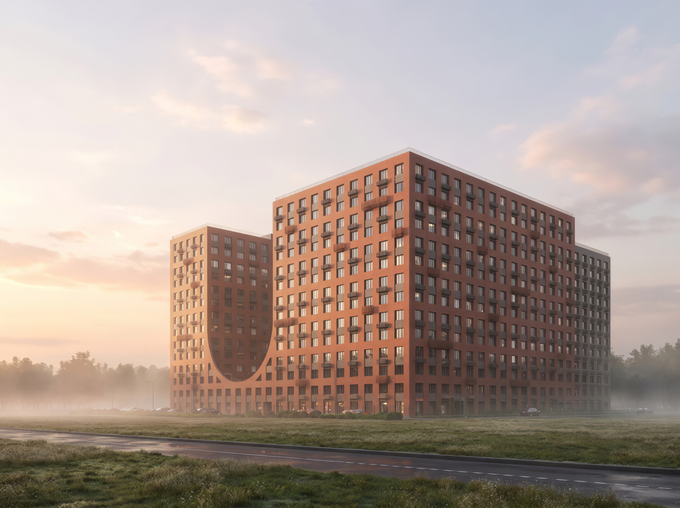
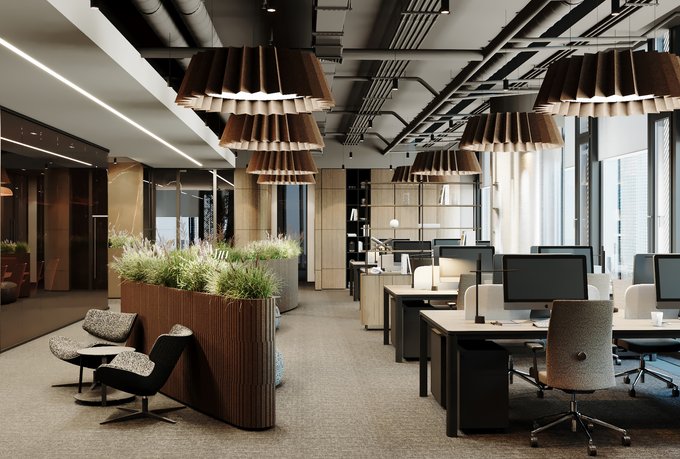
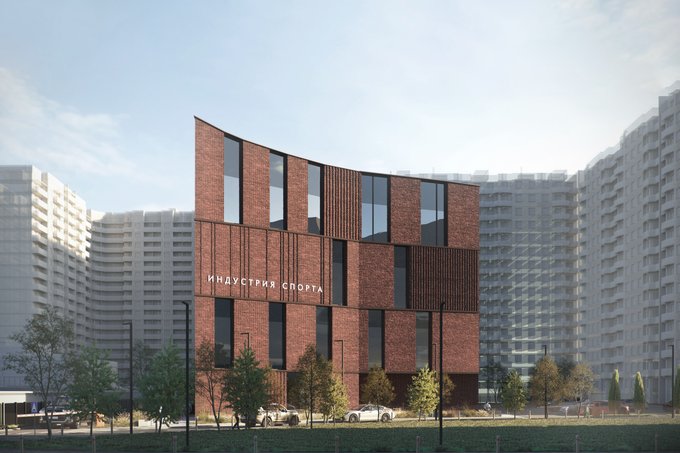
Apartment — throughout the world, Russia included, the term "apartment" is used for a premises comprising one or more rooms, offered for rent or purchase. In Russia, apartments as a housing type appeared relatively recently but are already popular. In Moscow, apartment projects are most often multifunctional complexes with a large office or infrastructure component, classed as "business" or "elite", which emphasizes the status of the apartment owner as a successful modern person. |
Bungalow |
|
 |
Bungalow — a single-storey house for one family, often with a flat roof and a spacious veranda. In tourism, small country houses standing apart from the hotel's main building are called bungalows. A bungalow may have several storeys occupied by one family. Its distinctive feature is its horizontal rather than vertical orientation. Bungalows are considered one of the most common types of real estate in Central and South America. This kind of residential house originated, in its time, in India. The word "bangla" means "a house in the Bengali style". Such houses are traditionally small, with only one storey, but with a spacious veranda. The design of such a house was based on the drawings of army camps, in which two-storey buildings were simply absent. |
Villa |
|
 |
Villa — a luxurious suburban house in the Italian style, usually on the shore of a warm sea. Marble, rotundas, columns and frescoes are typically used to decorate a villa. Today a villa is understood as a detached residential house (or a group of buildings and structures including residential buildings, structures and small architectural forms) with Mediterranean-style elements and an adjoining land plot with landscaping and planting. Most modern villas are one- or two-storey buildings. Characteristic elements of a modern villa include pseudo-porticoes, gable roofs covered with tiles (or imitation), columns, pergolas, atriums, integrated winter gardens, terraces with pools, etc. |
Duplex |
|
 |
Duplex — a building formed from two houses joined by a side wall and a roof. This housing format came to us from England. Today it is one of the most sought-after formats for living in the USA and European countries. In Russia duplexes have also become popular: relatives live in them, for example parents with their children next door, as well as people previously unacquainted who share a desire to live in comfort and without fuss. |
Studio apartment |
|
 |
Studio apartment — a type of residential premises that became popular in Russia in the 1990s. The main distinguishing feature of studio apartments is their small area, from 26 to 35 sq m, and the absence of a separately designated kitchen room. Studio apartments have been present on the real estate market for several decades; initially this format was used only in the economy class, but after successful adaptation on the market it began to appear in other real estate segments as well, such as business and elite. Couples choose studio apartments to start family life. For elderly people, such an apartment makes maintenance and care easier. |
Country house |
|
 |
Country house — a one- or two-storey residential house for one family with a mandatory adjoining plot. A classic country house consists of two rooms, a front one and a back one. A country house is intended for both permanent and temporary residence. Country houses are usually built outside the city, but can also be erected within city limits. The classic building materials are natural stone and red brick. Today country houses made of aerated concrete have become widespread, due to the high efficiency of this material, as well as wooden country houses (given the peculiarities of the Russian climate, and the economy and eco-friendliness of this building material). The second floor houses the bedroom(s), the first — the living room, kitchen, bathroom and boiler room. An indispensable attribute of a country house is an open fireplace. In a classic country house, the chimneys are located along the end walls of the building, perpendicular to the roof ridge. |
Loft |
|
 |
Loft — a type of housing that is a disused factory or other industrial building converted into living space. The English word "loft" means "attic"; in the USA the term also refers to the top floor of a shop or warehouse, but the style itself can be present in almost any premises. The loft is a relatively new type of residential premises that arose in the early 20th century in the USA, when industrial production and factories were moved out of the city. Students, musicians and artists settled in the vacated premises, attracted by the affordable rent. Gradually, representatives of the bohemia and the elite appreciated all the advantages of the loft: huge window openings, large spaces and the originality of the interior. In a loft, details of factories and warehouses are left in place: cast-iron stairs, brickwork, pipes and metal doors. The colour scheme can be laconic (white, black, grey) or rich (red, olive). Furniture is reduced to a minimum and "dissolved" in the space: transformer sofas, chrome-frame shelving, laconic tables and lamps. Street elements are used as decor: road signs, graffiti, advertising posters and everything one can encounter on the streets of a metropolis. A loft is a premises where an atmosphere of postmodernism reigns. The interior is easily transformed and offers unlimited opportunities for self-realization and self-expression. |
Lane house |
|
 |
Lane house — a type of low-rise residential development in which identical row houses are joined to one another by side walls. Each such house has a separate entrance, a small front garden and sometimes a garage. This model of urban planning was most developed in Great Britain of the colonial period, from the late 17th to the early 20th century. |
Mansard |
|
 |
Mansard — a residential premises of the attic type, formed on the top floor of a house with a sloping roof. The Frenchman François Mansart brought popularity to houses of this architecture with his work in Paris in the mid-17th century. |
Mezzanine |
|
 |
Mezzanine — a superstructure above the middle part of a residential house, in most cases with a balcony. A mezzanine has the shape of a square or a hexagon; in rarer cases — a cylinder or an octagon. Often this superstructure is not functional but simply a decorative element. In Russia the mezzanine became widespread in the 19th century. It became a distinctive feature of stone and wooden estates. |
Penthouse |
|
 |
Penthouse — a spacious apartment on the top floor of a building. Usually a penthouse is set back from the building's front vertical face, so that open decks or terraces are provided on one or more sides. However, in modern practice architects and apartment and house rental agents apply the term "penthouse" to the top floor of any building, regardless of its position relative to the façade. Although today the word "penthouse" denotes luxurious and expensive apartments with panoramic views, historically a penthouse was merely an annex with a single-pitch roof, a canopy or another small structure attached to a relatively large building. Modern penthouses have a number of distinctive features. One of them is a separate entrance or a separate elevator. The most luxurious penthouses can afford a rooftop pool, a jacuzzi, spacious open terraces and orangeries. Besides exceptional comforts, one of the main advantages of a penthouse is the view opening over the city, sea horizons, etc. Most of the world's most expensive penthouses today are located in central London, in New York (Manhattan), in Las Vegas and in Moscow. |
Townhouse |
|
 |
Townhouse — a complex of comfortable low-rise houses joined to one another by side walls. A garage, parking, several bedrooms, a kitchen, a basement — these are the main options a buyer or tenant can count on. Townhouses usually have several storeys. The total area of a modern townhouse is 200-300 sq m. The first floor of a townhouse usually houses utility rooms — the kitchen, wardrobe and dining room; the second — living quarters: bedrooms and the living room. The main distinguishing feature of a townhouse is a small adjoining plot. Literally, "townhouse" means "house in the city". Despite this, this type of real estate has gone beyond the city limits and become an integral part of suburban and resort real estate. Today the townhouse is largely suburban property and a model of country architecture. In Russia, townhouses are understood as a complex of individual houses of modern layout, where each house is in close proximity (sharing walls) to the other houses. Today whole settlements consisting of townhouses can be found near Moscow. |
Chalet |
|
 |
Chalet — usually a two- or three-storey wooden structure in the mountains with a sloping roof. The growing interest in this style is explained not only by its charm but also by its exceptional practicality. The main distinguishing feature is the sloping roof, which can project up to three meters beyond the perimeter of the walls. In rainy weather such a roof protects the foundation from getting wet, and in winter it holds the mass of snow, giving the house extraordinary beauty. The walls of the ground and first floors are built of natural brick. The corners of the house are faced with natural stone, and the walls themselves are finished with textured plaster. The second floor is usually built of glued profiled timber. Massive beams supporting the large roof overhangs run around the entire perimeter of the house. An integral part of the chalet is the terrace, where in good weather one can have a barbecue. |
Chateau |
|
 |
Chateau — one of the most luxurious types of living and rental real estate in Europe. In France, "chateau" is the name given to castles and palaces that once belonged to major landowners. Moreover, a chateau is also a country residence of the French nobility, which makes this type of real estate similar in its historical essence to Italian villas. At present, a chateau is any building built in any style and in any era, provided there is "historical kinship" with its feudal predecessor. |