Constructivism — from the Latin constructio, "building" — is an art movement in the art of a number of European countries of the early 20th century that proclaimed construction, not composition, to be the basis of the artistic image. Characteristic manifestations of constructivism in architecture, graphics and sculpture are abstract geometricism and the use of collage, photomontage and spatial constructions.
Constructivism in the interior arose as a distinctive answer and alternative to Art Nouveau. The laconicism of constructivism and its emphasized simplicity greatly appealed to those tired of pretentious floral ornaments and the flowing lines of the surrounding environment. Clarity, thoughtfulness, precision and a complete absence of "decoration for decoration's sake" — the constructivist style was a completely new, fresh direction that utterly destroyed the previous notions of interior design.
The theorist of constructivism was the Austrian architect Adolf Loos. In his books he treated the house as a single form that tolerates nothing superfluous, and launched merciless criticism at the practice of decorating buildings with all kinds of "excesses". Under the influence of his ideas, many prominent masters of Art Nouveau became ardent followers of constructivism.
 The main principle of the constructivist style was rationalism. Why gilding and luxurious stucco if they bring no practical benefit? After all, only what is useful and convenient is beautiful. A table is simply a table, and a bed is just a bed — nothing more. An interior and furnishings executed in this style are extremely simple. At the same time, constructivism in the interior is quite capable of presenting surprises. A successful combination of bright, cheerful shades, unexpected asymmetry and striking, unusual lighting make it possible to achieve very beautiful results. That is why constructivist interior design remains relevant to this day. Interest in it has not faded, and individual elements of the style can be encountered everywhere.
Constructivism in the interior proved so attractive for its time because it was an interesting and captivating experiment, allowing something completely new and unexpected to be created. In fact, constructivism is far from as simple as it seems. Everything is very carefully thought out, and every detail is in its place. Much effort went into creating all this simplicity. Things are light and mobile, although, it must be admitted, they are not always convenient to use. A modern person furnishing their home is offered an incredibly wide choice of the most diverse directions and concepts. Whatever interior style you prefer, the main thing is to create an environment of beauty and comfort around you. It is precisely the constructivist interior style that offers a multitude of unusual ideas for implementation.
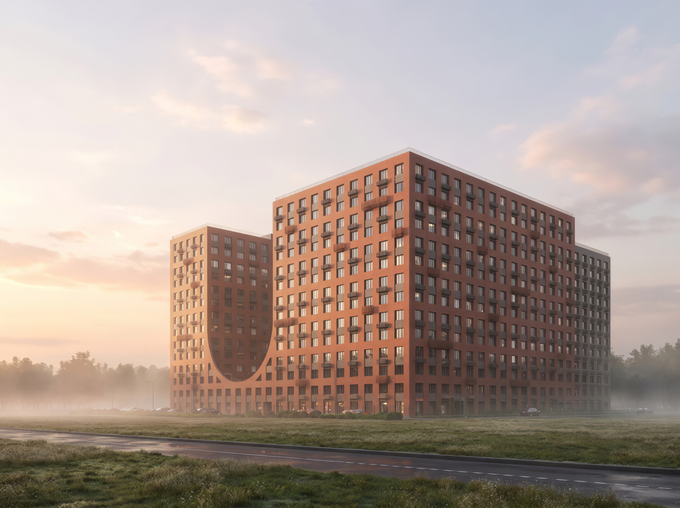
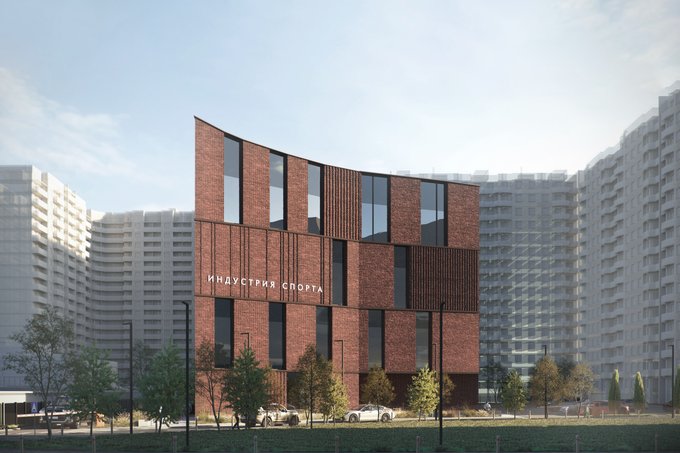
A distinguishing feature of constructivism in the interior is well-thought-out functional solutions and strict adherence to their requirements, compact volumes with a clearly expressed frame, and technical clarity in the construction of the architectural form. Refined proportions, the use of reinforced concrete, brick and glass, and the absence of stucco decor. In the premises, zoning is carried out in an abstract way, most often by means of lightweight movable partitions; no corridors, no enclosed spaces — everything is clear, functional, with nothing superfluous: these are the principles of constructivism.
Constructivism — the beginning of the 20th century
 The beginning of the twentieth century was marked by turbulent and rapid events, new discoveries and monstrous mistakes, insane projects and daring experiments, crushing failures and deafening victories. In this era, life and art changed at a frantic pace. What had previously seemed unshakable was consigned to oblivion, and a new aesthetic, new interior styles took its place. Intoxicated by the wind of change, architects rushed to realize their boldest ideas, which were entirely imbued with the spirit of the new times. Their muse was technology itself, with its angular contours and flawlessly functioning mechanisms — it was in this era that constructivism was born.
A characteristic feature of the constructivist style was rationality: in the distribution of space, in the choice of materials, in the colour scheme, in the form of furniture, in lighting — it was rationality that made constructivism popular. Buildings were always created according to one plan — a hall or entrance and a multitude of small premises, each with its own function. This is how houses, administrative buildings, hospitals, schools and other structures were built. The materials used by constructivism are simple and functional, as is furniture in the constructivist style. Metal, glass, plastic and other polymers make the constructivist style economical. Constructivism does not accept unnecessary details in the interior, pretentious materials or decorative objects. Constructivism adapts to human needs, not to the vagaries of fashion; it is always understandable, and the interior in the constructivist style is purposeful and convenient.
The constructivist style emerged in connection with the social and industrial tasks set before architects by the new Soviet leadership. There was no room for decor and elaborate forms, and constructivism became a symbol of the unification of society and universal levelling. The emergence of the new design style was also facilitated by the appearance of new materials and the introduction of new technologies — the widespread use of reinforced-concrete structures, large-scale glazing, and the use of plastics and chipboard in the finishing of buildings.
With its absolute elevation of the aesthetics of the very construction of a thing, constructivism is an ideological relative of functionalism, which was developing in those years and served the utilitarian purpose of furniture and its comfort. Built-in, sectional, collapsible and transformable furniture was introduced. Special furniture was developed for hotels, banks and schools.
Constructivism — the modern stage
For the former USSR, the ideas of constructing the surrounding environment, the simplicity and utilitarianism of object forms were an antithesis to bourgeoisness with its luxurious way of life. The aesthetics of constructivism underlay the industrial production of tableware, fabrics and furniture.
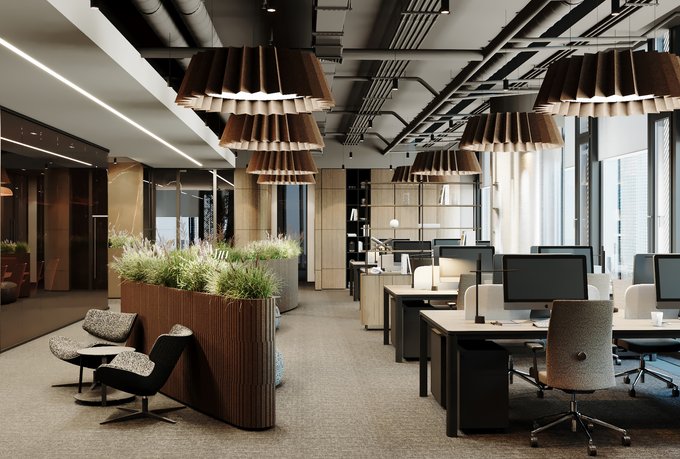
The modern constructivist style, which is often used in interior design, is not so strict and primitive. Despite the preserved simplicity and the cutting off of superfluous details, there is more colour, light and open space. Designers working in the constructivist style do not overuse the division into rooms, allow themselves to play on contrasts, and set accents with bright colours — yellow, blue, red, black, white. At the same time, furniture in the constructivist style retains correct geometric outlines, but designers seek out new constructions within the bounds of reasonable solutions and affordable textures. The constructivist style is easy to recognize by the absence of ornaments, by geometric figures and proper straight and curved lines, and by a small number of shades.
Well-thought-out and functional solutions, very compact volumes with a brightly expressed frame — this is what characterizes modern constructivism. The use of reinforced concrete, brick and glass, a complete absence of any stucco decor, clarity of lines, rhythmic alternation of elements, and contrast of surfaces.
Recently, items in the constructivist style have become increasingly popular at furniture exhibitions and in designer collections. Tired of designers' excessive passion for decoration, consumers have once again turned their gaze towards constructivism. Above all, this concerns the introduction of the constructivist style into the interiors of public buildings and office furniture.
Constructivism in its renewed form uses high technology, machinery and the atmosphere of futuristic megacities. Moreover, the constructivist style gave rise to many movements in design art — the industrial style, the high-tech style, techno and many others. In the rationality and functionality of a simple interior, which the constructivist style embodies, there is also an aesthetics of its own — one only has to see it.