Minimalism — a little history
 The end of the 1900s was marked by the appearance of constructivism, both in architecture and in interior objects. The smooth lines and curves of languid Art Nouveau breed fatigue in a person whose life is changing under the impact of developing industrial production, the appearance of the telephone, the car and other technological novelties. Human existence is simplified, and so is the architecture of his home. Frank Lloyd Wright, the famous American architect, develops the concept of minimalist houses for the life of ordinary workers — this serves as the beginning of the emergence of the minimalist style.
In a simple "box" for living, elegant flourishes and frivolous decor look ridiculous and garish. After the First World War, Europe finally abandoned the excessively bourgeois and decorative Art Nouveau, moving towards the architecture of the "future". Every object in a minimalist interior is simplified, performing only its direct functions; the premises is spacious and filled with light.
In Russia, minimalism, which appeared in the 1920s, was a sign of protest and renunciation of bohemianism, luxury and refinement, dictated more by social necessity than by fashion.
Minimalism — the main features of the interior style
 Minimalism suits radicals; it includes only the most necessary. Minimalism is a search for ideal proportions, for new colour schemes. This interior style arises at the turn of epochs, when people are in search of something new.
The minimalist style is gradually becoming more popular and has not gone out of fashion for a long time. In an apartment decorated according to the principles of minimalism, more free space is left, only the most necessary furniture is used, and built-in and transformable furniture is popular. This is quite understandable: light and space are valued more than unnecessary things. Besides, fashion for furniture and accessories changes quite often, and after some time the interior requires renewal.
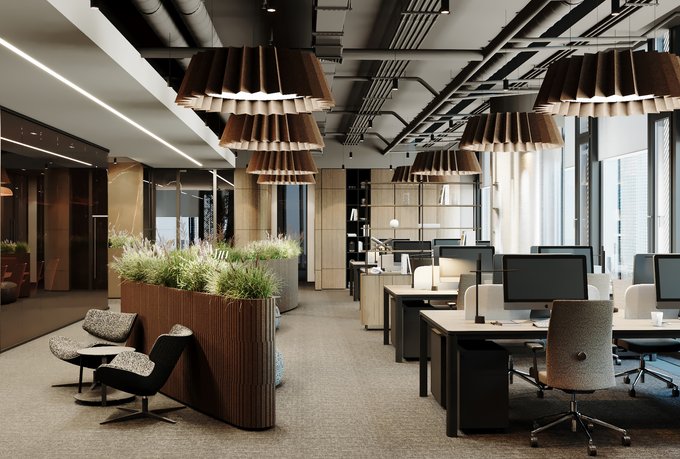
Today minimalism is characterized by the use of only the most necessary objects and a complete absence of decor. Everything is modern, durable and functional. The most important detail of this interior style is a well-organized space with calm lighting. The premises should have no internal partitions, and the windows should be large so that plenty of light comes in.
According to designers, minimalism is preferred by self-sufficient, creative and philosophically-minded people. In a premises where "there is little of everything" they think better; nothing distracts them from their own thoughts and reflections, and it predisposes to rest and relaxation.
The main features of the minimalist style are freedom and calm; as a rule, neutral, pastel, soft and calm tones are used, while bright minimalist interiors occur but much more rarely.
Minimalism in the interior
 The colour scheme of minimalism is black-and-white, based on a play of halftones, where an abundance of white is set off by black. This is the basic palette, but it is complemented by natural tones of wood, glass and brick. The ceiling, floor and walls should be of a light tone. The division of space occurs with the help of floor colour and semi-transparent fabrics; the use of glass sliding partitions is also possible.
The materials of the minimalist style are natural ones with rough processing — wood, concrete, plaster, brick.
Minimalism in the interior gives a special place to the window; it is excellent if it is large, if a beautiful view opens from it — in this case one can give up curtains and drapes, one can "let" nature into one's home. However, if outside the window there is the city with its endless bustle and movement, it is better to use curtains or blinds, but they must necessarily be simple, in keeping with the interior.
There is practically no decoration on windows and walls. Luminaires are usually simple in shape; they are built into the walls, ceiling or floor.
For minimalist furniture, the use of glass shelves of shelving units, cupboard doors and countertops is appropriate. Furniture has no smooth lines; on the contrary, sharp corners are welcomed — chairs and armchairs of rectangular shape, sofas with the same cushions and with hard armrests. Light-coloured upholstery; it can be accented with cushions of a different colour.
Minimalism also does not do without accessories, but they too must be minimal, inconspicuous and of correct geometric shape, so as to harmoniously complement the overall design. Simple metal or transparent fabric blinds are excellent for windows, so that they are inconspicuous in the interior.
Fancy decorative and carved elements, exquisite fountains are categorically contraindicated! Abstract paintings, for example in the spirit of Kandinsky, will be an excellent addition to an interior in the minimalist style; the frame should also be simple and laconic, with thin outlines. Canvases of rich painting, photographs and large mirrors in luxurious frames will bring disharmony into the interior design of the premises; it is better to give them up.
The use of metal and glass also lends this style modernity.
Minimalism in today's design
 Minimalism is a symbol of freedom from nooks in the interior where unnecessary junk gradually accumulates, from superfluous things distracting from the "important".
Fashion for interiors, as for clothes and lifestyle, periodically returns, undergoing changes in accordance with the times and people's needs; the minimalist style is a clear confirmation of that.
Today it is very fashionable to combine minimalism with functionalism. Every object in a minimalist interior performs several functions at once.
Thus, the bed also serves as a storage place for various small things and items; built-in wardrobe niches with mirrored walls serve for a visual expansion of the space and "adding" light; the hard armrests or cushions of a sofa are used as a side table on which one can put a glass or a cup.
Modern minimalism reflects the thought — "in little one can express much" — better than anything else.